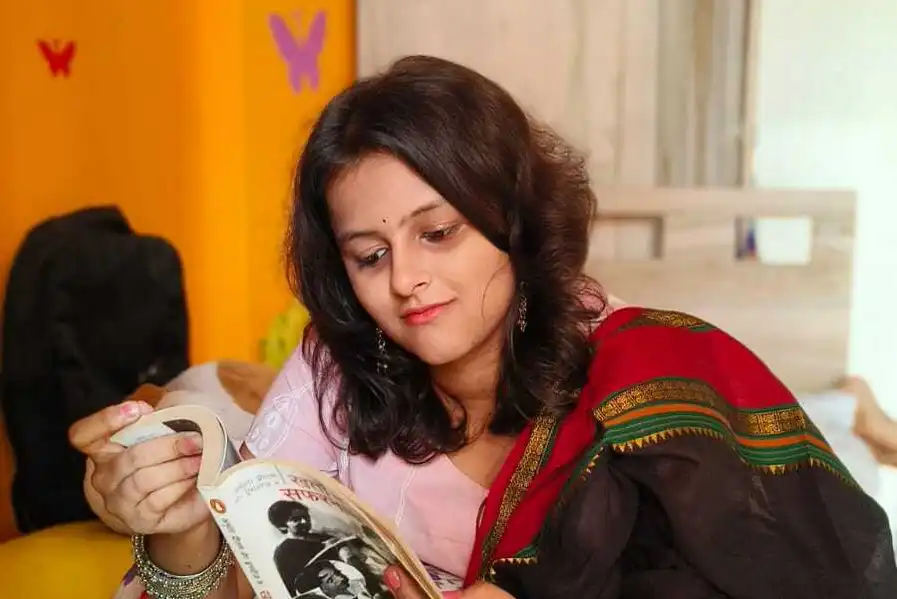
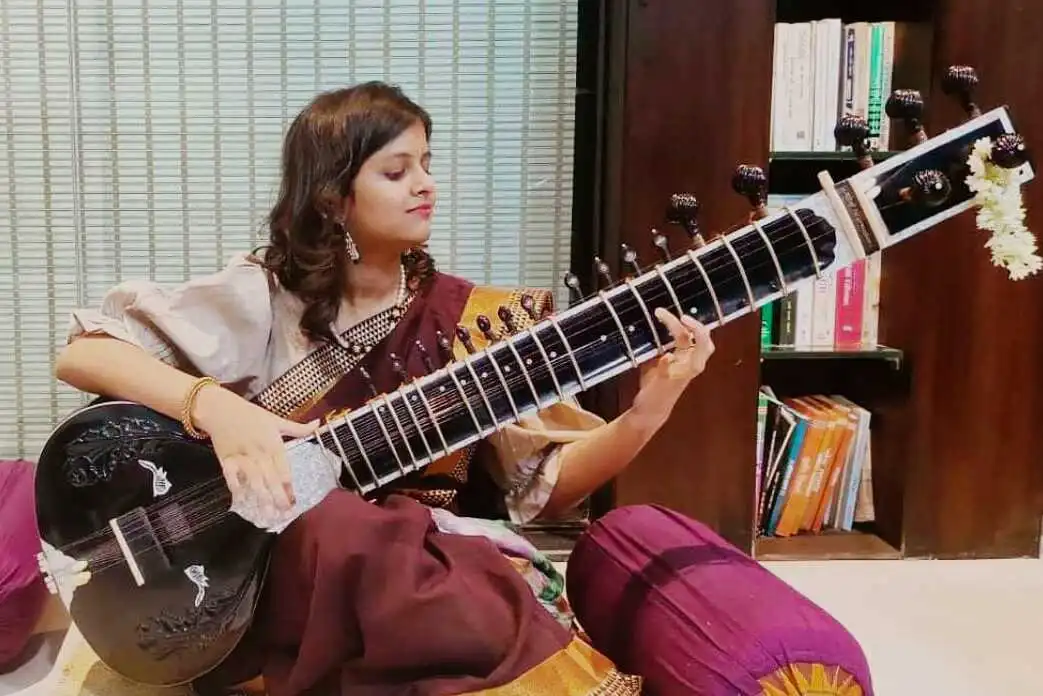
I remember being eighteen, standing beneath the weary shelter of a bus stop as the sky darkened and the rain fell in relentless sheets. My college bag weighed on one shoulder, my sitar on the other—its wooden frame pressed to my chest through its sturdy case, much like a child seeking comfort in a storm. I flipped through the pages of a book, not to read, but as an impromptu shield to keep my phone dry (yet another virtue of reading hard copies, I must confess! :P).
But my mind was elsewhere. In a world where art is often overlooked, where tradition survives more through the unwavering will of a few than the embrace of many, I found myself wondering—how long before the weight became too much? Just then, the bus arrived, splashing through puddles, and the conductor, with a knowing nod, ushered me in first. Not for me, but for what I carried. In that moment, he saw beyond the physical burden on my shoulders—he saw an artist, struggling yet resolute, carrying not just an instrument but the quiet, unrelenting hope that someone, somewhere, still believed in keeping the arts alive.
My A3 Philosophy
What Does It Mean to Conserve Art?
As I settled into my seat, a thought pressed upon me—what do we really mean when we say, “Let’s conserve our arts”? It is not simply about preserving forms or traditions; it is about nurturing art itself—as a thought, a practice, an idea, a manifestation, a creation. But what does it truly mean to sustain art?
We often say that hunting and gathering were humanity’s first professions, yet before even that, there was something more—the instinct to find meaning in colours and patterns, the understanding that we rest beneath a thousand stars to rise stronger the next day. Is that not art? And if art has been with us since the dawn of civilisation, shaping our survival and identity, then surely it is not meant to exist in isolation.
Beyond the Words
Art as Humanity’s First Language
As I stepped off the bus and thanked the conductor for his kindness, he met my gaze and said, “Keep playing, baccha. The world needs its artists more than it knows.”
His words stopped me in my tracks. It was not just a passing farewell—it was a quiet truth. In any civilisation, art flourishes when society embraces it—not just in museums or theatres, but in the way we live, the way we tell stories, the way we uplift those who create. A song survives because a voice sings it; a painting endures because someone stops to look. And so, I wondered—at what point did experiencing art become a privilege rather than a shared responsibility? When did we start seeing it as something negotiable, rather than something we all hold the power to protect?